.png)
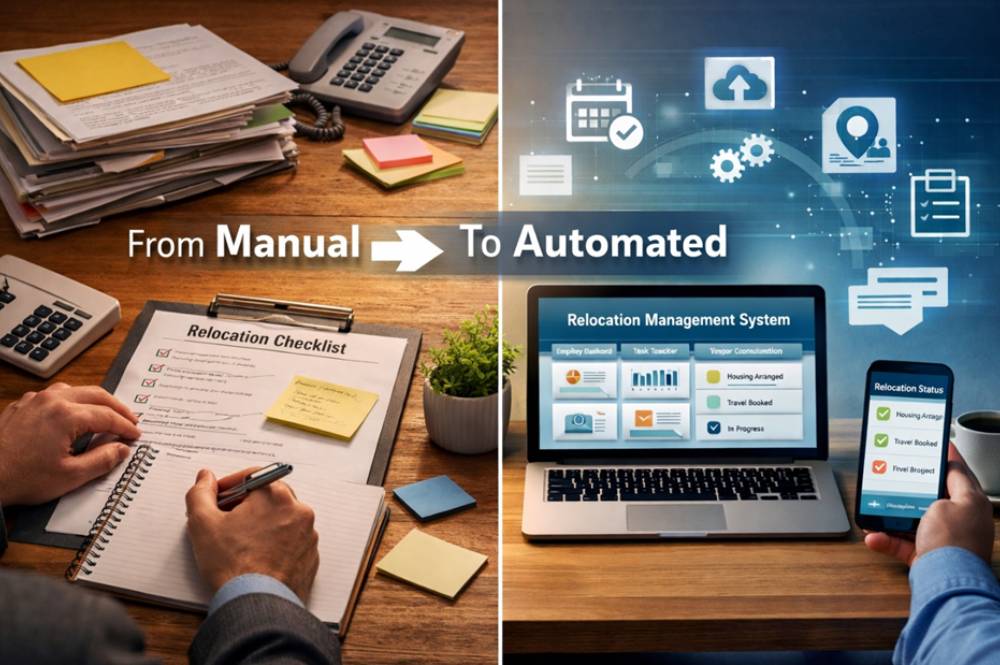
From Manual to Automated: A Step-by-Step Guide to Digitizing Your Relocation Program
Corporate relocation has traditionally been managed through emails, spreadsheets, vendor calls, and constant follow-ups. While this approach may work at a smaller scale, it becomes inefficient as organizations expand geographically or increase relocation frequency.
Today, companies are shifting toward relocation process automation. By adopting digital systems and relocation software, businesses can streamline workflows, reduce errors, and deliver a smoother experience for both employees and HR teams.
This step-by-step guide explains how to digitize your relocation program and transition from fragmented coordination to a modern, automated relocation ecosystem.
Why Manual Relocation Programs No Longer Work
Manual relocation management creates operational challenges such as:
- Limited visibility into relocation status
- High dependency on emails and manual follow-ups
- Inconsistent employee experience
- Vendor misalignment and delays
- Increased administrative workload for HR
As organizations scale, these inefficiencies directly impact timelines, costs, and employee satisfaction. Corporate relocation digital transformation becomes essential to remain efficient and competitive.
What Does It Mean to Digitize a Relocation Program?
Digitizing a relocation program means replacing manual coordination with structured, technology-driven workflows.
- Automating approvals and documentation
- Centralizing vendors and services
- Tracking relocation progress in real time
- Enabling employee self-service
- Using data analytics to improve future relocations
The objective is not just automation, but full relocation management modernization aligned with business growth.
Step 1: Map Your Existing Relocation Process
Before implementing automation, document your current workflow.
- Relocation stages (pre-move to post-settlement)
- Stakeholders involved (HR, managers, vendors)
- Common delays or bottlenecks
- Repetitive or manual tasks
This assessment identifies where relocation process automation will create the greatest impact.
Step 2: Identify Automation-Ready Tasks
Not every task requires manual oversight. Common areas to automate employee relocations include:
- Policy-based approvals
- Vendor scheduling and allocation
- Employee communication updates
- Expense tracking and reimbursements
- Status reporting and compliance checks
Automation ensures consistency while reducing dependency on individual follow-ups.
Step 3: Choose the Right Relocation Software
Selecting the right relocation software is critical to successful digital relocation implementation.
Look for features such as:
- End-to-end relocation lifecycle management
- HR and employee dashboards
- Vendor integration capabilities
- Customizable relocation policies
- Data security and compliance features
- Scalability across cities and regions
The ideal platform simplifies operations instead of introducing additional complexity.
Step 4: Centralize Relocation Operations
Digitization enables full centralization of relocation activities.
Instead of relying on emails, shared drives, and disconnected vendors, a digital system consolidates all relocation tasks within one platform.
Centralization reduces operational friction and allows HR teams to manage relocations at scale.
Step 5: Enable Employee Self-Service
Modern relocation programs prioritize transparency and employee empowerment.
With a digitized system, employees can:
- Track relocation progress
- Upload and manage documentation
- View timelines and next steps
- Access housing and destination support information
Self-service capabilities reduce anxiety, minimize HR queries, and improve overall relocation satisfaction.
Step 6: Integrate Vendors Digitally
Vendor coordination is often the weakest point in manual relocation programs.
Digital platforms allow:
- Verified vendor onboarding
- Standardized service workflows
- Real-time status updates
- Vendor performance tracking
This improves accountability and eliminates repetitive back-and-forth communication.
Step 7: Use Data to Optimize Relocation Outcomes
Digitization generates actionable data insights.
Key metrics to track include:
- Average relocation timelines
- Cost per relocation
- Employee satisfaction scores
- Vendor performance ratings
- Productivity downtime during moves
These insights allow continuous improvement and stronger relocation strategy alignment.
Step 8: Drive Adoption Through Change Management
Technology implementation requires structured change management.
- Clear communication to employees
- Training for HR and administrative teams
- Phased rollout strategies
- Leadership sponsorship and alignment
Successful adoption ensures long-term value from digital relocation implementation.
Benefits of Automating Employee Relocations
Organizations that digitize relocation programs experience:
- Faster relocation cycles
- Reduced administrative workload
- Improved employee experience
- Better compliance and reporting
- Scalable relocation operations
Automation transforms relocation from a reactive task into a strategic business capability.
The Future of Corporate Relocation
As workforce mobility increases, organizations must modernize relocation frameworks. Companies that invest in corporate relocation platforms are better positioned to support growth, retain talent, and operate efficiently across multiple locations.
Digitization is no longer optional — it is a necessity for modern enterprises.
FAQs
What does it mean to digitize a relocation program?
It involves using relocation software to automate workflows, centralize operations, and improve visibility across the relocation lifecycle.
How does relocation process automation help HR teams?
Automation reduces manual workload, improves tracking accuracy, minimizes errors, and enables HR teams to manage relocations efficiently at scale.
Is relocation software suitable for companies of all sizes?
Yes. Modern relocation platforms are scalable and can be tailored for startups, mid-sized firms, and large enterprises.
How long does digital relocation implementation take?
Timelines vary based on complexity, but most organizations complete implementation within weeks to a few months through phased adoption.
Can automated relocation improve employee experience?
Yes. Increased transparency, self-service access, and reduced delays significantly improve employee satisfaction during relocation.